
In response to a Facebook ad for my memoir services, a woman mentioned she was working on her second memoir. A guy responded, “Isn’t one enough?” I thought, “That isn’t nice, suggesting her efforts aren’t worthwhile.” But I decided to treat it as a serious question, not as a putdown.
My response was, “An autobiography covers a person’s entire life while memoirs range in the time periods they cover. Some memoirs cover decades and others cover shorter periods. For example, my memoir about helping refugees at the Ukrainian border covers a two-month period in 2022.”
To his credit, he then wrote, “Ah, thank you for clarity on that… and now yours sounds way more interesting. Thank you!”
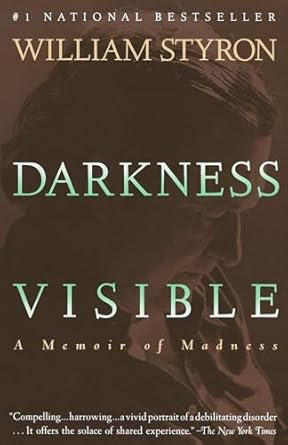
There is no perfect length for a memoir, in terms of number of words, or in terms of the time period covered. Just as there are long and short novels, there are long and short memoirs. Probably the shortest memoir I’ve read is Darkness Visible: A Memoir of Madness, by William Styron. It was a New York Times bestseller, despite being only 98 pages long. It’s a brief yet nevertheless compelling book because it is tightly focused on the author’s struggle with depression.
Ultimately, the test of any book, whether fiction or non-fiction, is whether it effectively conveys the story or information it intends to convey. Brevity is actually more difficult than wordiness. This was famously expressed by the French philosopher and mathematician Blaise Pascal when he wrote, “I would have written a shorter letter, but I did not have the time.”
Typically, memoirs cover a period of at least a few years in a person’s life. Many memoirs describe the 18 years or so of the author’s childhood. My Ukraine memoir mainly discusses the two-month period (and a little bit about the following months) when I was assisting refugees at the Ukrainian border because it was such a meaningful period of time for me (not to mention for the refugees themselves).
You’ll sometimes find memoirs that cover decades of the author’s life, even their entire life. For example, actor Michael Caine’s highly enjoyable memoir Blowing the Bloody Doors Off: And Other Lessons in Life starts with his childhood and proceeds to the present day.
This raises the question, what’s the difference between a memoir and an autobiography? It is sometimes a fine line. I would say that an autobiography attempts to be a thorough overview of a person’s entire life up to that point, while a memoir is more selective. It may cover a particular period in time, it may cover only those experiences that fit a particular theme (such as addiction or mental illness), or it may consist of assorted memories from their life without purporting to be comprehensive (as with Caine’s memoir).
While memoirs vary in length, I would caution against going too short or too long. You have to meet reader’s expectations, particularly as a beginner. Too short, and they may not feel they’re getting their money’s worth. Too long, and it may be too daunting for the typical reader. While Styron’s brief memoir was highly successful, it’s a difficult feat to pull off. Most readers expect a book to be of a certain length. A full-length book (whether a novel or memoir) is typically at least 60,000 words. Styron was able to cover a difficult topic in so few words because he uses language very precisely. He was no newbie. In fact, he was a Pulitzer-prize winning author with one of his many works being Sophie’s Choice. Most writers need more words to adequately tell their story.
What matters is getting the words down. Start as focused as you can and then flesh out your ideas. Provide ‘telling details’ that help readers feel they are experiencing the moments with you. Give yourself permission to write messy, unstructured first drafts, because you can’t edit a blank page. Get the words down and never forget that your story matters.